My Experience
My first experience with the compensation craze came when I reviewed a P365 AXG Legion. Like many folks, I noticed the trend with the P365 X-Macro series. I previously had little experience with compensated handguns, and the P365 AXG Legion kind of blew me away.

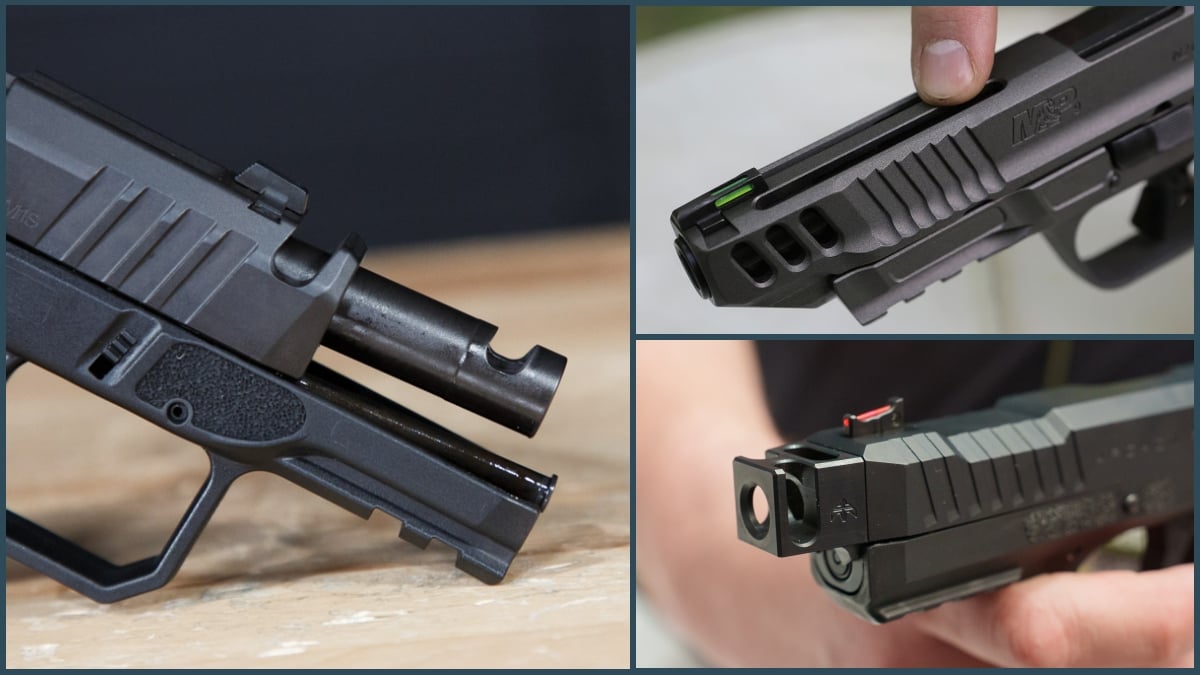
There are several different types of compensation. Some use cuts in the slide, some have cuts in the barrel and the slide, and some are more like small ports that vent gas through the barrel and slide. While they are all different, the goal is the same: a flatter shooting experience.
The Pros
Compensated handguns are very flat shooting. The concept behind them is that gas is vented upward, applying downward pressure to counter the upward flip of the muzzle. Typically, compensated handguns have a quick return to target, and it feels like you do not lose your sight picture.

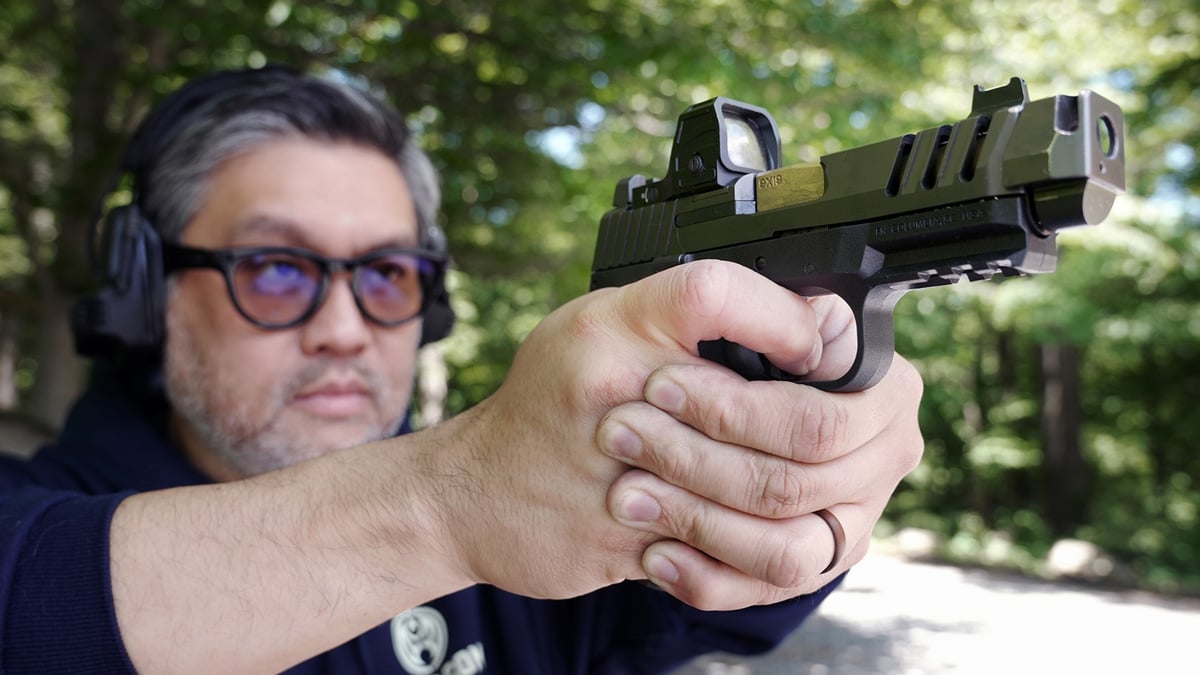
The compensation makes it much easier to achieve follow-up shots. With a quick return and lighter impact to the wrists, you can re-acquire the target faster after every shot, which makes shooting easier.
The Cons
Many folks do not care for compensated handguns because of a few negatives that are worth discussing, starting with flash. There is no denying that venting the gases upward increases the flash in your sight picture. While this mainly depends on the type of ammunition, it is still worth mentioning. Some designs are worse than others, but flash is a reality when shooting compensated.
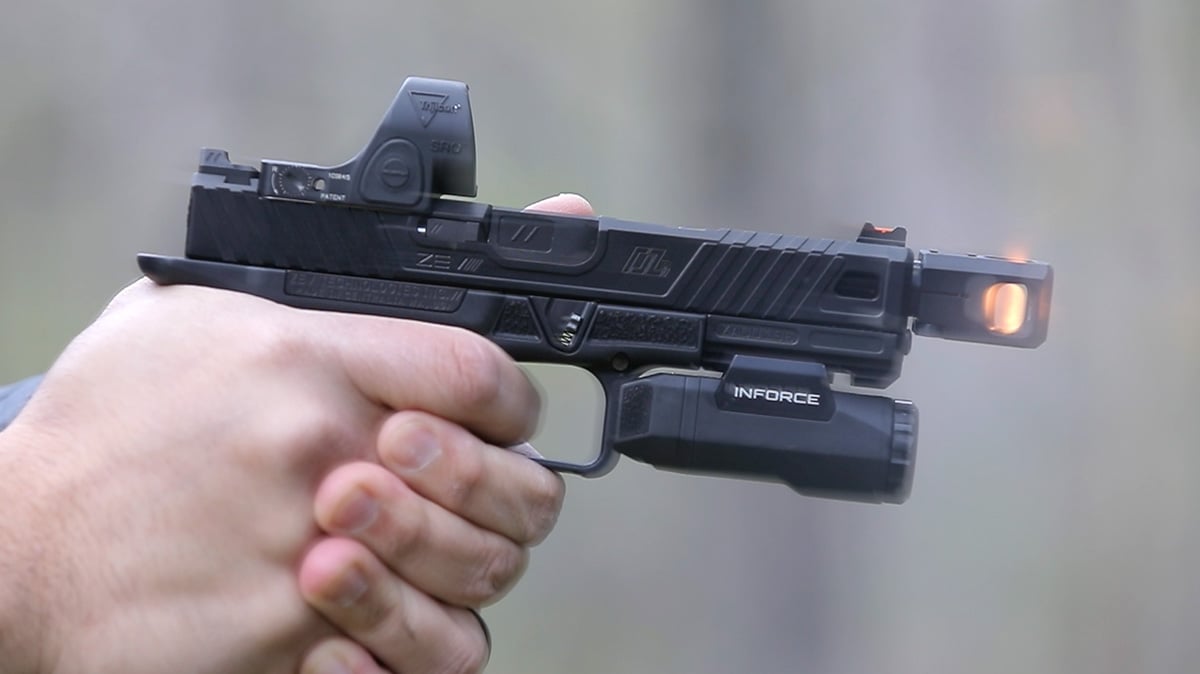
Another con is that comps can be overly aggressive. I have shot one design that felt over compensated; it felt like the handgun was being pushed down. This can make follow-up shots a little more difficult. I will note that I have only experienced that once, and most seem to be well balanced.


The last detractor, which I hear as the main opposition, is that the compensator creates a snag point. I concede that the compensation adds a certain open area that can snag on things; however, I don’t see a compensator being that big of a snag point if you have a good holster. It certainly isn’t more of a snag than an optic, and most people are pro-optic. So, while it may be an issue, in specific circumstances, I don’t view that as a major detractor.
Here to Stay
There looks to be no end in sight to the trend of compensated handguns. It seems every company is dropping new versions of its popular handgun lines updated to include compensation of some kind.
Glock was one of the first companies to add a compensation cut to its popular lines before it was cool. While the Glock C model went away for a while, the introduction of the V series Glock saw the return of the compensator.
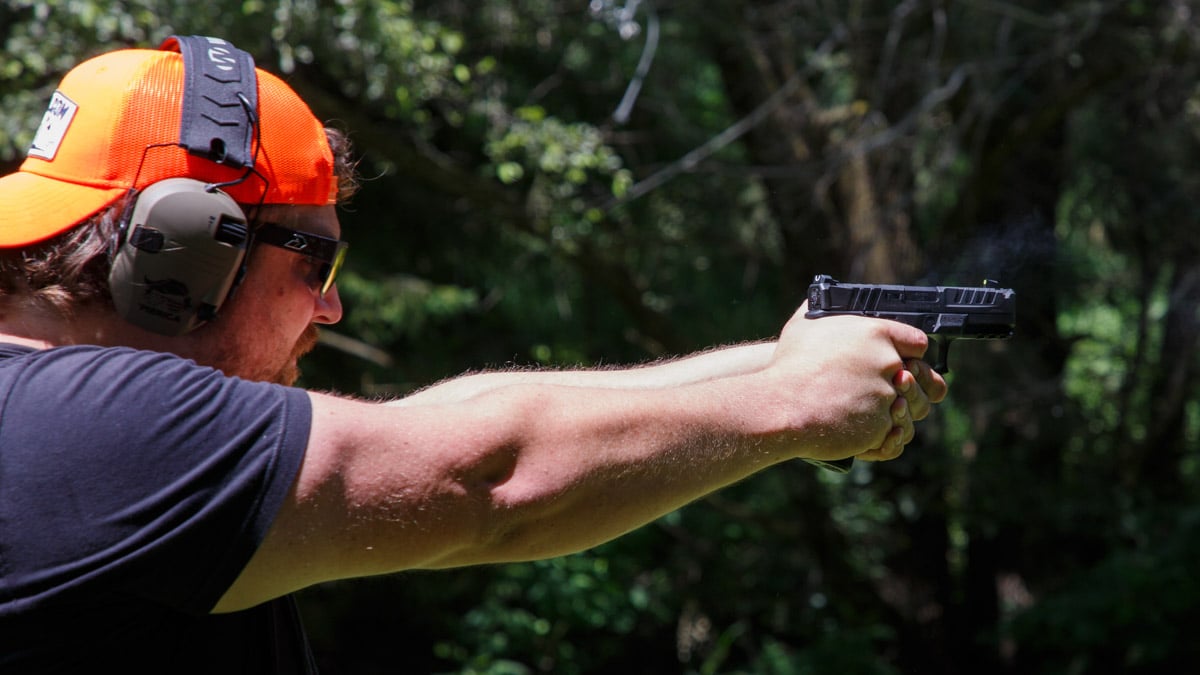
For many folks – myself included – the compensated handgun is the way to go. Faster follow-up shots, a quicker return to the sight picture, and a flat shooting experience can all help make you more effective. I love compensated handguns, and while I will admit to the cons, I think the pros outweigh them.
So, Go Train
Ultimately, compensated or not, the most important thing is to train on your carry platform. Dry fire, hit the range, and practice, because as good as the handgun can be, the skill of the shooter is the lynchpin. Let us know what you think of compensated handguns, but more importantly, get out and train.




Alexander Reville
Alexander Reville is a writer and content creator for Guns.com who transitioned from the warehouse to the content team fueled by a passion for American history and firearms. A proud graduate of Marion Military Institute and a former minor league hockey player, he remains active as a firearms instructor and private security contractor.
View All Articles by Alexander Reville